What Is Brush Hogging? The Complete Guide to Clearing Overgrown Land

Brush hogging is the process of cutting down thick brush, tall weeds, briars, and small saplings using a heavy-duty rotary mower, usually pulled behind a tractor or built into a forestry mulcher. It’s the go-to method for reclaiming fields, fence lines, and lots that a regular lawn mower can’t touch. If your land has gotten away from you, brush hogging is almost always the first step back.
That’s the short answer. But if you own land on Maryland’s Eastern Shore, or anywhere overgrowth tends to win the fight, you probably have more questions than that. How does it actually work? What can it cut through? Do you rent equipment, or call a pro? And when does a basic brush hog stop being the right tool for the job?
We’ve cleared hundreds of acres across Centreville, Queen Anne, Easton, and the surrounding Eastern Shore, and we’ve seen just about every version of “overgrown” a property can throw at us. This guide breaks down what brush hogging really involves, what it can and can’t handle, and how to know when it’s time to bring in equipment built for the job.
What Does Brush Hogging Actually Mean?
The term “brush hog” comes from a specific brand, Bush Hog, which has made heavy-duty rotary cutters since the 1950s. Over time, the name stuck the same way “Kleenex” became shorthand for tissue. Today, “brush hogging” just means cutting through brush, weeds, and light woody growth with a rotary cutter, no matter who made the machine.
A standard brush hog is a flat, heavy deck with spinning blades underneath, mounted to a tractor’s three-point hitch and powered by the tractor’s PTO (power take-off) shaft. It’s built tougher than a regular mower deck because it’s meant to chew through material a lawn mower would choke on: tall grass, briars, blackberry canes, and saplings up to a few inches thick.
Did You Know? The “5 horsepower per foot” rule is the most common guideline tractor owners use to match a brush hog to their equipment. A 6-foot cutter, for example, generally needs at least 30 horsepower at the PTO to run without straining the tractor or the gearbox.
How Brush Hogging Works, Step by Step
Brush hogging looks simple from a distance, just a tractor driving back and forth. But there’s more going on underneath than most people realize, and the process changes depending on what’s actually growing on the land.
Equipment Setup
The cutter attaches to the tractor’s rear three-point hitch, and the PTO shaft transfers engine power to the gearbox that spins the blades. Most brush hogs run at 540 RPM, the standard PTO speed for this type of implement. Getting the right match between tractor horsepower and cutter width matters here. Run a heavy cutter on too small a tractor and you’ll bog down constantly, work the gearbox harder than it’s designed for, and risk a breakdown mid-job.
Cutting Pattern and Pass Strategy
Operators usually work a field in overlapping rows, planning the route based on terrain, slope, and where debris should be thrown. Cutting too high leaves stubble that regrows fast. Cutting too low risks hitting rocks, stumps, or uneven ground. Most properties need more than one pass if growth has gotten tall and thick, since a single pass on heavy brush can stall the blades or leave behind a tangled mat instead of a clean cut.
Handling Dense or Woody Growth
This is where a basic brush hog starts to show its limits. Standard rotary cutters can usually handle saplings up to two or three inches in diameter. Anything thicker, or anything truly woody like established brush, vines, or small trees, asks more of the machine than it’s built to give consistently.
Pro Tip: If a property has been sitting untouched for more than two or three years, expect woody stems mixed in with the grass and weeds. A standard brush hog can usually cut through it, but it will take it slower and with more wear on the blades than a fresh field would.
What Can a Brush Hog Actually Cut?
This is the question we get asked the most, usually right before someone tells us how long their field has been sitting. Here’s a straightforward breakdown of what a standard rotary cutter handles well, and what starts pushing past its limits.
| Material | Standard Brush Hog | Forestry Mulcher |
| Tall grass and weeds | Handles easily | Overkill, but works |
| Briars and blackberry canes | Handles well | Handles well |
| Saplings (1-3 inches) | Handles, with some strain | Handles easily |
| Small trees (3-6 inches) | Struggles or stalls | Handles in a single pass |
| Established brush and woody stems | Inconsistent results | Built for exactly this |
| Stumps left behind | Cannot grind | Grinds to ground level |
A brush hog is the right call for fields, pastures, and lots where the growth is mostly grass, weeds, and lighter brush. Once a property crosses into small trees, dense woody growth, or years of neglect, the job usually calls for heavier equipment.
The Equipment Behind the Job
Not every brush hog is the same machine, and the differences matter more than most first-time landowners expect. Understanding the basic categories helps explain why pricing, capability, and results vary so much from one job to the next.
Rotary Cutters (The Classic “Brush Hog”)
This is the original style: a flat deck with one or more spinning blades, pulled behind a tractor and powered through the PTO shaft. Rotary cutters come in widths from about 4 feet for smaller tractors up to 15 feet or more for flex-wing models used on large acreage. Cutting height typically adjusts from around 1.5 inches up to 6 inches, which matters for pasture work where overly short cutting can stress grass roots.
Flail Mowers
A flail mower uses small, free-swinging blades mounted on a rotating drum instead of one or two large blades on a flat deck. The cutting action is gentler and produces a finer mulch, which makes flail mowers a better fit for roadside work, fine grass management, and situations where a cleaner finish matters more than raw cutting power. They generally cost more upfront and handle thick woody material less aggressively than a heavy-duty rotary cutter.
Forestry Mulchers
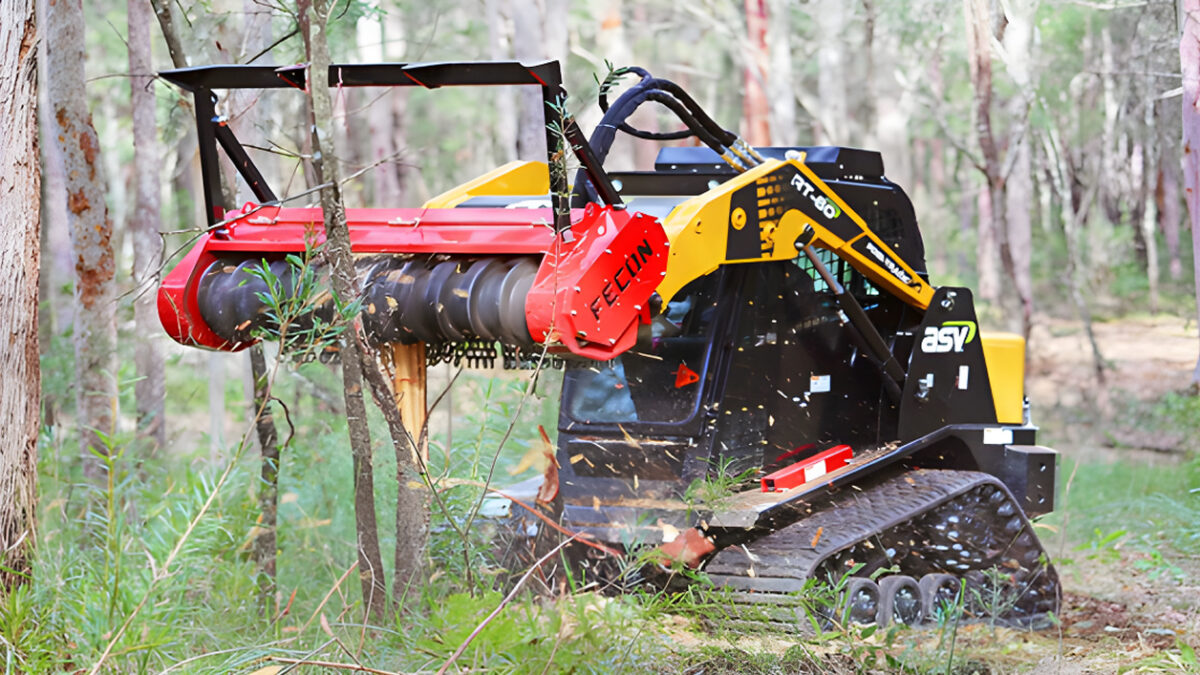
These are a different category entirely. Instead of a flat deck with blades, a forestry mulcher uses a horizontal drum or disc fitted with carbide teeth that shred material on contact, including standing trees up to several inches in diameter. Many run on skid steers or dedicated tracked carriers rather than standard farm tractors, which gives them better stability on uneven or soft ground.
Did You Know? Forestry mulchers can process material at ground level and slightly below, which means stumps from the current job get ground down in the same pass instead of being left behind for separate stump grinding.
Brush Hogging vs. Forestry Mulching: Which Does Your Land Need?
People often use “brush hogging” as a catch-all term, but it’s worth knowing the difference between a rotary cutter and a forestry mulcher, because they’re built for different jobs.
A brush hog cuts material and leaves it lying on the ground, similar to mowing a lawn but on a much heavier scale. It works fast and costs less to run, which makes it a solid fit for routine field maintenance and lighter overgrowth. A forestry mulcher, by comparison, grinds brush, saplings, and small trees into a fine mulch layer in a single pass, stumps included, and leaves nothing to rake or haul away afterward.
We made the switch to forestry mulching as our primary method years ago, after watching brush hogs stall out repeatedly on Eastern Shore properties that had been sitting for five, ten, sometimes twenty years. Grass and weeds, a brush hog handles fine. But once a field has gone that long without attention, what’s actually growing is closer to a young forest than a pasture, and that calls for a machine that can process woody material instead of just knocking it down.
Did You Know? Forestry mulching leaves the processed material on-site as a natural mulch layer, which helps protect topsoil and breaks down over time instead of creating a debris pile that needs to be hauled off the property.
When Should You Brush Hog Your Property?
Timing affects both the results and the cost of the job, so it’s worth planning around the seasons instead of just calling whenever the brush finally gets annoying enough.
Spring, Before the Growth Flush
Late winter through early spring is the best window to clear brush before plants put on their main seasonal growth. Cutting before green-up also makes it easier to spot what you’re dealing with, since dormant vegetation is thinner and easier to see through than a fully leafed-out field.
Fall, After the Growing Season
A fall pass knocks back the season’s growth before it goes to seed and resets the property heading into winter. This timing also works well ahead of hunting season, when better visibility and easier walking matter for access.
After Storm Damage or Long Neglect
Storms can knock down trees and limbs into already-overgrown areas, creating tangled debris that’s harder and more dangerous to clear the longer it sits. The same goes for land that’s simply been ignored for years. The sooner it gets addressed, the less the root systems and woody growth have had a chance to establish.
Pro Tip: If you’re planning to reseed a pasture or field after clearing, fall clearing followed by a spring reseed tends to give grass the best head start, since the ground has a full winter to settle before planting.
DIY Brush Hogging vs. Hiring a Professional
Renting a brush hog and tackling a property yourself is realistic for small jobs: a backyard lot, a short fence line, an afternoon’s worth of overgrown grass. It gets a lot less realistic once the property is larger, the growth is dense or woody, or the terrain has slopes, soft ground, or obstacles a rented tractor wasn’t built to handle.
Professional crews bring the right equipment for the actual condition of the land, not just a one-size-fits-all rental unit. That matters most on properties that have gone untouched for years, where standard brush hogs tend to stall, leave a messy half-cut field, or simply can’t grind through what’s grown in. A trained operator also reads terrain, adjusts cutting height for hidden obstacles, and knows when a job has crossed from “mowing” into “land clearing.”
If your property fits the DIY range, a rental and a free Saturday will probably get the job done. If it’s been sitting for years, has woody growth mixed in, or covers more ground than a single tractor pass can reasonably handle, professional brush removal services save time and avoid the trial-and-error of figuring it out with rented equipment.
Safety and Terrain Considerations
Brush hogging looks straightforward, but the equipment is heavy, fast-spinning, and unforgiving of mistakes. A few terrain and safety factors change how a job needs to be approached, and they’re worth knowing whether you’re renting equipment yourself or just want to understand what a contractor is checking for.
Slopes and Stability
Tractor-mounted cutters carry real weight low and behind the tractor, which shifts the center of gravity in ways that matter on hillsides. OSHA slope safety guidance for tractor-mounted mowing equipment caps comfortable operation around 15 to 22 degrees of slope, with steeper grades needing specialized equipment or a different clearing approach entirely. Narrower cutters help on slopes since they add less side weight, but judgment about the specific property always matters more than a blanket rule.
Hidden Obstacles
Fields that have sat untouched for years often hide more than tall grass. Old fence posts, rocks, stumps, farm debris, and even sinkholes or soft ground can be completely invisible under thick growth until a blade or a tire finds them the hard way. A first pass over unfamiliar land is usually done slower and higher than normal specifically to spot these hazards before committing to a full clearing pass.
Wildlife and Ground-Nesting Animals
Overgrown fields often become home to ground-nesting birds, rabbits, and other small wildlife, especially heading into spring and early summer. A quick walk-through before cutting, especially on land that hasn’t been maintained in a while, gives you a chance to spot nests or burrows and adjust the plan if needed.
Pro Tip: If a property has standing water, soft low spots, or recent rain, it’s usually worth waiting a few days before bringing heavy equipment onto the field. Wet ground under a loaded tractor can leave ruts that take a full growing season to recover from.
How Much Does Brush Hogging Cost?
Pricing depends heavily on acreage, vegetation density, terrain, and whether the work is a one-time clearing or routine maintenance. Most professional jobs are priced by the job rather than by the hour, since density and terrain affect time on-site more than acreage alone.
As a general starting point, smaller properties or lighter maintenance work often run in the range of a half-day job, while larger or more overgrown properties scale up toward a full day or more. A few factors tend to move the price the most:
- Vegetation density and type. Light grass and weeds clear faster than fields mixed with briars, vines, and woody saplings. Dense growth slows the pass and puts more wear on equipment, which shows up in the quote.
- Time since last maintenance. A field cut every year is a different job than one that hasn’t been touched in five or ten. Long-neglected land usually takes more passes and more time per acre.
- Terrain and access. Slopes, soft ground, water features, and tight access points all add time and sometimes require a different equipment approach than flat, open acreage.
- Acreage and shape. Large, open, rectangular fields clear more efficiently than small, irregularly shaped lots with obstacles to navigate around.
Getting an accurate number means having a free property estimate, since photos or a satellite view of the property let a contractor give a realistic price before ever showing up. Properties with unusual terrain, standing water, or other complications are worth mentioning upfront so the estimate reflects the real scope of the job rather than a rough guess.
Maintaining Land After Brush Hogging
A single brush hogging pass clears what’s there, but keeping a property from sliding back into overgrowth takes a maintenance plan. Most actively used pastures and fields hold their condition best with two to three passes a year, generally spaced around spring growth, mid-summer if growth is aggressive, and a fall cleanup before winter.
Properties used less intensively, like trails, fence lines, or back acreage that isn’t actively farmed, can often get by with one or two passes annually, timed to stay ahead of seed-set and woody regrowth. The longer a property goes between passes, the more the job shifts from routine mowing toward heavier clearing work, since brush and saplings that get a full season or more to grow start crossing into the size range a standard cutter struggles with.
Environmental Impact of Brush Hogging
Clearing overgrown land changes the property, and it’s worth understanding what that change actually does to the soil and surrounding ecosystem before committing to a plan.
Soil Health
Standard brush hogging leaves cut material on the surface, where it breaks down slowly and returns some organic matter to the soil. This is gentler on topsoil than methods that involve scraping or grading the land, since the root systems of grass and smaller plants stay intact underground and continue holding soil in place.
Erosion Control
Bare or heavily disturbed ground is far more prone to erosion than land with even a thin layer of cut vegetation and intact roots. Brush hogging, done correctly, knocks down growth without stripping the ground bare, which helps the property hold together through heavy rain rather than washing out.
Wildlife Habitat Balance
Overgrown land supports certain wildlife, but unchecked growth can also crowd out the kind of mixed habitat that supports a wider range of species. Periodic brush hogging, timed to avoid nesting season where possible, tends to maintain a healthier balance than either constant disturbance or total neglect.
Did You Know? Many wildlife management plans for pastures and fields actually recommend periodic brush hogging as a tool, since it controls invasive woody encroachment while preserving the open grassland habitat that ground-nesting birds and small mammals depend on.
Frequently Asked Questions
What is the difference between brush hogging and mowing?
Mowing handles light grass with a standard deck mower built for lawns. Brush hogging uses a heavy-duty rotary cutter designed to handle tall weeds, briars, and woody saplings that a regular mower can’t process without damage.
Can a brush hog cut down small trees?
Most standard brush hogs can handle saplings up to two or three inches in diameter. Anything thicker tends to stall the blades or leave an inconsistent cut, which is when forestry mulching equipment becomes the better option.
How often should a field be brush hogged?
Most pastures and fields benefit from brush hogging two to three times a year, typically in spring and fall, with a possible mid-summer pass if growth is aggressive. Frequency depends on what’s growing and how fast it comes back.
Do I need a permit to brush hog my own land?
Most residential and agricultural brush hogging does not require a permit, though it’s worth checking local zoning rules if the property borders wetlands, protected buffers, or conservation easements. A professional land clearing service can flag these concerns during a property walkthrough.
Is brush hogging better than hiring a forestry mulching company?
It depends on what’s actually growing. Brush hogging works well for grass, weeds, and light brush, while forestry mulching handles properties with established woody growth, small trees, or years of neglect in a single pass.
Ready to Reclaim Your Land?
Brush hogging is the right tool for fields and lots with grass, weeds, and lighter brush. Once a property crosses into woody growth, small trees, or years of neglect, it usually takes equipment built for heavier work to get the land back to usable.
If your property fits somewhere in between, or you’re not sure which one it needs, we can tell you after a quick look. Contact Brush Removal LLC for a free site walkthrough, and we’ll give you an honest read on what your land actually needs to get cleared right.